Titanium Machining for Custom Parts

Lightweight strength and corrosion resistance for engineered components.

GD Prototyping provides titanium CNC machining for custom titanium parts, from functional prototypes to low-volume production.

Get a Quote for Titanium Parts
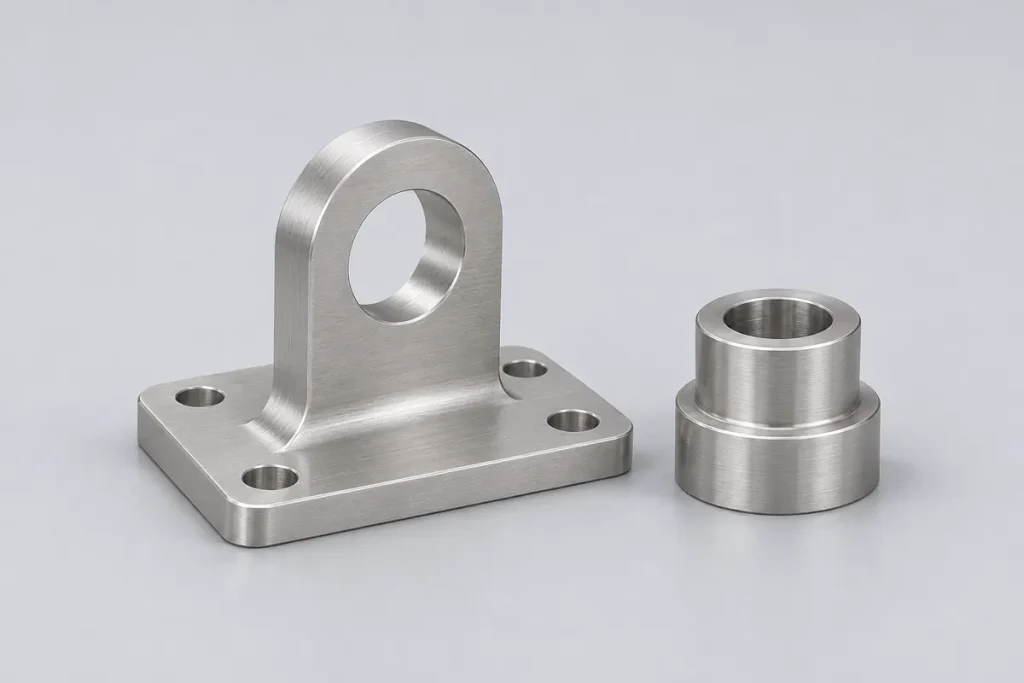
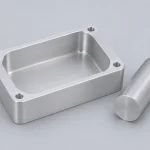
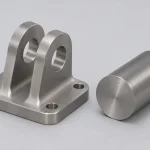
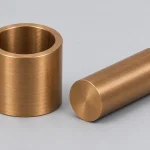
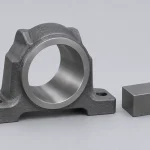
Illustrative titanium clevis bracket and round bar

Engineering Metals

About Titanium

Titanium includes commercially pure grades and alloys valued for their low density and corrosion resistance. Grade selection depends on the balance of strength, formability, machining requirements, and the part’s service environment.

Price
Quote-based
Lead Time
Confirmed with your quote
Wall Thickness
Based on part geometry and process
Tolerances
Based on drawing requirements
Max Part Size
Confirmed by part geometry and machine capacity
Titanium Grades
Grade 2, Grade 5, Grade 9, Grade 23 — subject to availability
Titanium Grade 2 Commercially pure titanium with corrosion resistance and formability for industrial components.
Material Condition Annealed bar Tensile Strength (Min.) ≥ 345 MPa 0.2% Yield Strength (Min.) ≥ 275 MPa Elongation (Min.) ≥ 20% Elastic Modulus (Typical) Approximately 105 GPa Density (Typical) Approximately 4.51 g/cm³
Titanium Grade 5 — Ti-6Al-4V A titanium alloy selected for high-strength, lightweight components and titanium alloy machining.
Material Condition Annealed bar Tensile Strength (Min.) ≥ 895 MPa 0.2% Yield Strength (Min.) ≥ 828 MPa Elongation (Min.) ≥ 10% Elastic Modulus (Typical) Approximately 114 GPa Density (Typical) Approximately 4.43 g/cm³
Titanium Grade 9 — Ti-3Al-2.5V An alloy offering a balance of strength and formability for lightweight components and tubing applications.
Material Condition Annealed bar Tensile Strength (Min.) ≥ 620 MPa 0.2% Yield Strength (Min.) ≥ 483 MPa Elongation (Min.) ≥ 15% Elastic Modulus (Typical) Approximately 107 GPa Density (Typical) Approximately 4.48 g/cm³
Titanium Grade 23 — Ti-6Al-4V ELI An extra-low-interstitial titanium alloy considered when ductility and fracture toughness are important to the application.
Material Condition Annealed bar Tensile Strength (Min.) ≥ 828 MPa 0.2% Yield Strength (Min.) ≥ 759 MPa Elongation (Min.) ≥ 10% Elastic Modulus (Typical) Approximately 114 GPa Density (Typical) Approximately 4.43 g/cm³

Tensile, yield, and elongation values are reference minima for annealed bar tested longitudinally at room temperature under ASTM B348-05 conditions: section thickness up to 76 mm and cross-sectional area up to 64.5 cm². Density and elastic modulus are typical values. Confirm the applicable specification, material condition, and certificate for each project.

Explore All Materials

Advantages & Considerations of Titanium

Advantages

  • Strength-to-Weight Ratio: Many titanium alloys combine low density with strength suited to weight-sensitive designs.
  • Corrosion Resistance: A natural oxide layer supports corrosion resistance in many environments. Suitability depends on the specific exposure.
  • Grade Selection: Commercially pure and alloyed grades offer different balances of strength and formability.
  • Fatigue Performance: Selected grades can support cyclic loading when part geometry and surface condition are considered.
  • Low Thermal Expansion: Titanium expands less than aluminum as temperature changes, which can be useful in thermally sensitive designs.

Considerations

  • Machining Challenges: Low thermal conductivity and relatively low stiffness make heat control and thin-wall stability important.
  • Material and Machining Cost: Titanium can cost more to purchase and machine than many commonly used metals.
  • Galling and Wear: Sliding or threaded interfaces may require attention to lubrication, coatings, or mating-material selection.

Our Commitment

Titanium Parts, From Material to Delivery

GD Prototyping supports material selection, machining, and inspection through a coordinated project workflow.

Grade Review

Review the required titanium grade, material condition, and documentation before production.

DFM Support

Discuss feature access, thin walls, and critical tolerances early in the project.

CNC Machining

Produce precision titanium parts through milling and turning to agreed drawing requirements.

Inspection

Check agreed dimensions and visual requirements using suitable inspection methods.

Finishing Coordination

Review finish options according to the material and part function.

Project Support

Coordinate quotation, production updates, and delivery arrangements.

Ready to Machine Titanium Parts?

Share your drawings and project requirements to discuss titanium prototyping, material selection, and a tailored quote.

  • Engineering Review
  • Material Guidance
  • Delivery Coordination
Upload CAD & Get a Quote
WhatsApp